

What Is A Softphone and Does Your Business Need One?
As more businesses move away from traditional business phone systems, softphones have become a popular alternative. But what is a softphone, and does your business need one? Softphones are software-based applications that let you use the internet to make calls.
For small businesses, remote teams, and growing companies especially, softphones offer a flexible way to communicate, with advanced calling features and lower costs than traditional phone systems. In this guide, we’ll explain what a softphone is and how it works so you can decide whether your business would benefit.
What Is a Softphone?
Softphones have been transforming the way businesses communicate, providing flexible business phone solutions. But what is a softphone? In the simplest terms, a softphone is a software-based phone that runs on a computer, smartphone, or tablet. It lets users make business calls over the internet rather than on a traditional desk phone that relies on copper wires.
Softphones use VoIP (Voice over Internet Protocol) technology to convert voice into digital data and transmit it over an internet connection. Instead of dialing from a physical handset, users place calls through an app installed on their device. Softphones are typically used on smartphones, computers, or tablets. They provide companies a flexible, cost-effective phone system that can be used anywhere they have an internet connection.
The main difference between a softphone and a traditional desk phone–also called a hard phone–is hardware. Softphones are software-based. You can install them on any device, and take them anywhere you have the internet. Desk phones, on the other hand, are physical pieces of hardware that are fixed to a location, tying you down to one place. Many businesses use a combination of both, but softphones are especially popular for remote and hybrid teams.
How Does a Softphone Work?
A softphone works by using the internet rather than traditional phone lines to make and receive calls. It relies on VoIP technology to connect calls between users. To the person on the other end of the line, the call appears the same as a typical call from a landline. Behind the scenes, however, the process is quite different. Here’s a quick look at how a softphone works:
- You place a call in the softphone app, dialing a number or selecting a contact.
- The call is routed to your VoIP provider before heading over to the recipient to establish a connection.
- Once the person answers, you can begin talking. Your voice is converted into digital data packets that are compressed and sent over the internet to the recipient’s device.
- The data packets are converted back into audio, allowing you to have a real-time conversation.
Softphones can call other softphones but they can also make calls to traditional phones. The entire process happens in milliseconds, making softphone calls feel just like traditional phone calls.
Because softphones depend on the internet, call quality is affected by bandwidth, latency, and network stability. You can ensure good call quality by using a wired connection and a properly configured network.
What Does a Softphone Look Like?
A softphone looks like a digital version of a traditional desk phone, displayed as an application on your computer, smartphone, or tablet. Instead of physical buttons, everything is controlled through an on-screen interface. Because softphones are software based, they usually have more functionality that a desk phone. For example, depending on your VoIP provider, you may be able to switch a voice call to a video call within the softphone app.
While designs vary by provider, softphones usually share a similar layout with core features. Most softphone apps include the following:
- Dial pad: An on-screen keypad for dialing phone numbers
- Contact list: Saved contacts and a company directory
- Call controls: Buttons for mute, hold, transfer, and hang up
- Active call window: Displays caller ID, call timer, and call status
- Voicemail access: Visual voicemail with playback controls
- Messaging panel: Chat or SMS, depending on the platform
On a desktop, the softphone is usually a small window that stays open while you work. On mobile devices, it looks similar to a standard phone app, but with added business features. Desktop softphones run on Windows, macOS, and Linux, while most mobile softphones work with both iOS and Android.
Many softphones allow you to customize your interface, with features like availability or presence status, dark mode, or compact views.
How to Set Up a Softphone
Setting up a softphone is a simple process, especially compared to installing traditional phone hardware. In most cases, you can be up and running in just a few minutes.
Most softphones come with a VoIP service or phone system that supports softphones. To set up a softphone, you need to pick a provider that has the business phone system features you need. After you sign up for service, you can install the provider’s softphone application on your device, whether it’s a computer, tablet, or smartphone.
Once downloaded, you’ll log in using your provider credentials and configure your preferred settings. From there, you can test your connection and start making calls with the softphone.
Tips for best performance:
- Use a wired internet connection when possible. Wired connections are faster and more reliable, which means your softphone will have better call quality.
- Close bandwidth-heavy apps during calls to avoid jitter, dropped calls, and other call quality issues.
- Keep the softphone app updated so it performs optimally.
- Use QoS settings on your network to prioritize VoIP calls.
Benefits of Softphones
Softphones offer flexibility, cost savings, and powerful communications features beyond what a traditional phone system can do. Here are some of the top benefits of softphones:
- Lower costs: Softphones eliminate the need to purchase desk phones and reduce installation and maintenance expenses. Since calls run over the internet, long-distance and international calling costs are often much lower than with traditional phone systems.
- Work from anywhere: Traditional desk phones tie you down to the office, but softphones can be used wherever you have access to the internet. This enables remote, hybrid, and field teams to communicate from anywhere.
- Scalability: Adding new users is fast and simple. There’s no need to install new phone lines or equipment when you onboard employees, making softphones perfect for growing teams.
- Privacy: With softphones, you can use your business phone number on your personal mobile device. This helps you keep business calls separate from personal calls, protecting your privacy while maintaining a professional image.
- Advanced call features: Most softphones include advanced features like call forwarding, call transfers, voicemail-to-email, call recording, call queues, auto attendants, and more.
- Integrations: Many softphones integrate with third-party applications like CRM systems, help desks, and productivity tools. This allows call data, notes, and customer information to pop up automatically.
- Improved productivity: With calling, messaging, and video conferencing on one app, softphones reduce the need to switch between platforms so your team can work more efficiently.
- Quick setup: Softphones can usually be installed and configured in minutes. Software updates quickly provide new features and bug fixes without any hardware changes necessary.
Top Softphone Features
One reason businesses are switching to softphones is for their powerful features that go far beyond basic calling. Whether your business is large or small, these softphone capabilities can take your team to the next level.
- Dial pad and call controls: Just like a physical phone, softphones include an on-screen dial pad as well as call controls like answer/end call, mute, hold, call transfer, and redial. Additionally, you may be able to turn the call into a video call, access your messages or calendar, and other advanced features that aren’t possible on a desk phone.
- Shared contacts: Softphones store your contacts and can sync with business directories or CRMs. This makes it fast and easy to find client contact information and place calls without memorizing tons of phone numbers.
- Voicemail: Softphones usually include access to voicemail, with features like voicemail transcription, voicemail-to-email, and playback controls. This makes managing voice messages easy, even when you’re away from the office.
- Call forwarding and call routing: Advanced routing lets you forward calls to another user or device, set business hours, and route based on availability. This ensures that calls always reach the right person at the right time.
- Call history and logs: Most softphones let you view recent inbound, outbound, and missed calls. Some softphones also show duration, timestamps, and caller ID details.
- Presence and availability: Presence indicators show whether a teammate is available, away, busy, or offline, so you know when they’re ready to take a call or message.
- Instant messaging: Most modern softphones include built-in messaging so teams can exchange quick texts, share files, and create group chats all within the app.
- Conference calling: Setting up conference calls is simple and intuitive within the softphone app.
- Customizable settings: Users can personalize settings like ringtones, call rules, and audio devices to tailor the experience to individual workflows.
- Cross-device syncing: Softphones sync settings and call history across desktop and mobile apps, so your communication stays consistent whether you’re at your desk or on the go.
How to Get the Right Softphone for Your Business
With so many providers on the market, choosing the right softphone solution can be difficult. You want to find something that fits into your budget while also offering the features you need most. Here are some tips for getting the right softphone for your business:
- Before you commit to a provider, you need to understand your communication needs. Start by asking what your team actually needs from a softphone. Will most users be remote or in the office? Do you need unified communications features like video, voice, and messaging or just voice? Understanding your use cases can help you narrow down options and avoid paying for features you won’t use.
- Make sure the softphone works with your devices. For example, if your business only uses Apple products, look for providers that have macOS and iOS apps.
- How easy is the application to use? Look for a softphone with an intuitive interface. A simple, easy-to-use app reduces onboarding time and support requests. Many providers offer free trials so you can test drive the system before you commit.
- Choose a softphone that will grow with your business. How easy is it to add and remove users? Does pricing increase predictably with growth? Scalable solutions save time and money as your team expands.
- If you use tools like CRM or help desk software, look for softphones that will easily integrate. This allows you to automatically log calls, access customer data on inbound calls, or sync contacts across systems.
- Does the softphone provider offer security and compliance features? Look for encryption for calls and messages, security authentication like single sign-on or multi-factor authentication, and compliance with relevant regulations.
- Turn to 1Call Technologies for more help. We’ll do the work of auditing your setup, evaluating your needs, and searching for providers that fit!
What Is a Softphone? Conclusion
Businesses of all sizes are switching to softphones today, but what is a softphone? It’s a software-based phone that provides you with powerful features for internet-based calling. Whether you’re looking to save on hardware costs or enable remote teams, softphones offer tons of benefits.
Need help finding a softphone provider? 1Call Technologies helps businesses like yours evaluate technology needs and make better buying decisions. We work with top providers, offering tailored recommendations based on what you need, and help you save money in the long run. Contact us today to transform your business communications with expert help you can trust!

Unleash the Power of Communication: Top 5 VoIP Phone Systems for Businesses in 2024
By now moste busienss know that the traditional landline is a relic of the past. Today’s businesses require a communication system that’s agile, feature-rich, and cost-effective. Enter Voice over Internet Protocol (VoIP), a technology that transmits voice calls over your existing internet connection.
With a plethora of VoIP providers on the market, choosing the right system can feel overwhelming. But fret not! This blog post dives into the top 5 VoIP phone systems for businesses, highlighting their key features and benefits to empower your decision-making.
Top 5 VoIP Phone Systems for Businesses in 2024
-
RingCentral: A powerhouse VoIP solution renowned for its comprehensive features and user-friendliness.
- Features: Robust suite including call forwarding, voicemail transcription, auto attendants, video conferencing, and integrations with popular CRM and productivity tools.
- Benefits: Ideal for businesses seeking a one-stop shop for all their communication needs, with exceptional scalability for growing teams.
-
Nextiva: A customer-centric VoIP provider known for its ease of use and exceptional customer support.
- Features: User-friendly interface with features like call recording, analytics, multi-level auto attendants, and integrations with various business applications.
- Benefits: Perfect for businesses prioritizing a smooth user experience and top-notch customer support, making the transition to VoIP seamless.
-
Dialpad: An AI-powered VoIP system built for the modern workplace, especially for data-driven decision-making.
- Features: Integrates seamlessly with popular business tools, offers real-time call analytics with AI-powered insights, and boasts advanced call coaching features.
- Benefits: Ideal for businesses seeking a future-proof solution with advanced analytics and a focus on data-driven communication strategies.
-
8×8: A secure and reliable VoIP solution, well-suited for medium to large businesses with complex communication needs.
- Features: Offers robust security features, comprehensive call management tools, video conferencing, and integrations with various business applications.
- Benefits: Perfect for businesses prioritizing security and scalability, with features catering to geographically dispersed teams and complex communication workflows.
-
Net2Phone: A user-friendly and affordable VoIP solution ideal for small businesses and startups.
- Features: Easy setup, unlimited calling within the US and Canada, as well as 40 Interantional destinations voicemail to email, auto attendants, and mobile app for on-the-go calling.
- Benefits: A cost-effective option for small businesses seeking a simple yet feature-rich VoIP solution with a focus on core communication functionalities.
Choosing the Right VoIP System:
While these top 5 VoIP providers offer exceptional features, the “best” system depends on your unique business needs. Consider factors like:
- Business size and complexity: Larger teams may require more advanced features compared to smaller startups.
- Budget: VoIP systems offer tiered plans to accommodate different budgets.
- Features and functionality: Prioritize features that align with your communication workflows.
- Scalability: Choose a system that can grow with your business.
- Ease of use: Consider the technical expertise of your team.
Embrace the Future of Communication
Transitioning to VoIP unlocks a world of possibilities for your business. Improved collaboration, cost savings, and enhanced customer experiences are just a few of the benefits you can reap. By carefully evaluating your needs and exploring the features offered by these top VoIP providers, you can make an informed decision and empower your business to thrive in the digital age.
Bonus Tip: Take advantage of most VoIP providers’ free trials to get a firsthand feel for the user interface and functionalities before committing.
FAQ
- Is VoIP secure? Security is a top priority for VoIP providers. Reputable providers offer robust security features like encryption to protect your calls and data.
- What internet speed do I need for VoIP? A stable and reliable internet connection is crucial for VoIP calls. Generally, a minimum upload speed of 2 Mbps per user is recommended.
- Can I keep my existing phone number with VoIP? Yes! In most cases, you can port your current phone number to your new VoIP service provider.
- What happens if my internet goes down? Some VoIP providers offer backup solutions like call forwarding to a mobile phone in case of internet outages.
- How much does VoIP cost? VoIP plans vary depending on features and the number of users. However, VoIP is generally more cost-effective compared to traditional landlines.
Let us know in the comments below what features are most important to you in a VoIP system!
Get a quote for your Business https://1calltechnologies.com/get-a-quote
Superior Chamber of Commerce


Best VoIP Business Phone Systems for 2023
Have you ever looked into VoIP Phone Systems
In the age of digital connectivity, communication is a cornerstone for a businesses overall success, and small businesses, just like their larger counterparts, need an efficient and cost-effective communication solution, thta provides all the features neccessary to compete in todays marketplace. Voice over Internet Protocol (VoIP) phone systems have emerged as a game-changer in this regard.
Benefits of VoIP for Small Businesses
VoIP offers several benefits to small businesses. It’s cost-effective, scalable, and offers a wide range of features. But with the market flooded with options, it’s crucial to identify the best VoIP phone systems suitable for your small business.
Top VoIP Phone Systems for Small Business
At 1 Call Telecom, we offer a wide range of the Best VoIP providers, so let’s explore the top VoIP phone systems that we believe cater to the unique needs of small businesses:
Nextiva
Nextiva is shaping the future of growth for all businesses. Start learning how your business can take everything to the next level. Go learn. Products. Business Phone Service. Small Business Phone Service. Small Business, their full array of services and solutions provide business with more than just phone service, they provide a full on marketing and communication platform to drive growth and productivity.
RingCentral
RingCentral is a well-known name in the VoIP industry. It offers a comprehensive suite of communication tools, including voice, video, and messaging. Small businesses can enjoy high-quality calls, conferencing, and integrations with popular business apps.
Grasshopper
Grasshopper is tailored for small businesses and entrepreneurs. It’s known for its simplicity and flexibility. Grasshopper provides a virtual phone system with features like call forwarding, voicemail, and custom greetings.
Vonage Business
Vonage Business is another VoIP solution that caters to small and medium-sized enterprises. It boasts excellent call quality, an easy setup process, and features like call recording and virtual meetings.
Ooma Office
Ooma Office is an excellent choice for budget-conscious small businesses. It offers advanced features like virtual receptionist, voicemail, and conference calling. Plus, it’s easy to set up and manage.
8×8
8×8 is a cloud-based VoIP solution that provides a range of services for small businesses. It includes unlimited calling, team messaging, and video conferencing. The system is highly scalable and adaptable.
Features to Look for in a VoIP Phone System
Most companies look for the following featires when they are selecting a VoIP phone system for their small business, so consider the following essential features:
Scalability
Ensure the system can grow with your business.
Cost-effectiveness
Evaluate the total cost of ownership, including hardware and subscription fees.
Call Quality
Voice quality is paramount for successful communication.
Integration Options
Check if it can integrate with other essential software and apps.
Customer Support
Responsive and helpful customer support is vital.
How to Choose the Right VoIP Phone System
Selecting the right VoIP system involves understanding your business needs, budget, and the level of technical support required.
1 Call Telecom, is a leader provider of Business communications services and solution for over 30 years, our expertise can help quide you in selecting the right system for your companies, needs and budget, set up a free call to access your needs and requiements and let us show you what we can do for your business.
Conclusion
In conclusion, VoIP phone systems offer small businesses an affordable, feature-rich communication solution. When selecting a VoIP system, consider scalability, cost-effectiveness, call quality, integration options, and responsive customer support. Setting up and managing a VoIP system is relatively straightforward, and it can lead to increased efficiency and cost savings.
FAQs
1. Is VoIP suitable for all types of small businesses?
Yes, VoIP can be adapted to various business needs and sizes, making it a viable option for most small businesses.
2. How does VoIP affect my business’s budget?
VoIP systems are generally cost-effective, with savings on long-distance calls and hardware. The overall impact on your budget depends on your usage and provider.
3. What if I encounter technical issues with my VoIP system?
Most providers offer customer support to help you resolve technical issues promptly.
4. Is VoIP secure for sensitive business communication?
VoIP security is a priority for providers, but it’s essential to implement additional security measures to protect sensitive data.
5. Can I keep my existing phone number when switching to VoIP?
Many VoIP providers offer number portability, allowing you to retain your existing phone number.
In this digital age, the right communication system is essential for small businesses. VoIP phone systems offer a range of benefits, and by choosing the right one, you can enhance your business’s efficiency and cost-effectiveness. So, make an informed decision and embrace the power of VoIP for your small business.
Best VoIP Business Services of 2023
The Best VoIP Service Providers for Small business in 2023 we believe is Nextiva!
Why Nextiva Stands Out for Small Businesses:
Nextiva’s All-in-One VoIP Solution
In the ever-evolving landscape of business communication, we at 1 Call Telecom believe, Nextiva emerges as a frontrunner, catering to the needs of small and mid-sized enterprises. With its user-friendly interface, advanced call management features, and a spectrum of pricing plans, Nextiva has secured its position as an ideal choice for businesses seeking a comprehensive VoIP solution.
Nextiva’s Essential plan, in particular, shines as an excellent budget-friendly option. This plan includes essential business communication features such as unlimited nationwide calling, auto attendants, video calling, online fax, voicemail, and even a toll-free number. Furthermore, Nextiva’s mobile and desktop applications are included at no additional cost, ensuring that you can work from virtually anywhere.
 For companies in search of more robust functionality, Nextiva offers higher-tier plans that provide advanced integrations with popular platforms like Microsoft Teams, Salesforce, and ZenDesk. Additionally, you can benefit from features like SMS messaging and call recording. However, it’s worth noting that Nextiva’s international calling options may be limited compared to some other providers.
One pivotal factor that sets Nextiva apart is its impressive 99.999% uptime rate, a crucial metric when selecting a VoIP provider. Uptime represents the percentage of time a VoIP system remains operational and available to its users, emphasizing Nextiva’s reliability.
Furthermore, Nextiva garners acclaim for its high call quality and consistently positive customer ratings on various online review platforms. The company’s customer support stands out with round-the-clock availability by phone and additional support through chat and email during business hours.
In summary, Nextiva presents an attractive choice for small businesses seeking an affordable all-in-one VoIP service. It offers user-friendly software, exceptional call quality, and nearly flawless uptime.
1 Call Telecom a leader in providing Telecom and Cloud Solutions is a Platinum partner for Nextiva we can help your business make the move to the best VoIP system for your specific needs, visit here 1 Call Telecom to get  a quote !
Learn how Nextiva can enhance your companies communications, save money and improve productivity with the latest in VoIP Technology!
Simplify Your System, Enhance Performance: Upgrading to Virtual Small Business Phone Systems
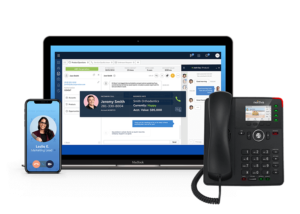 In the ever-evolving landscape of business communication, the conventional multi-line office phone setup that once sufficed may no longer meet the demands of modern enterprises. Managing a labyrinth of tangled wires, phone jacks, and intricate connections is not only time-consuming but also counterproductive. As the workforce increasingly shifts towards remote work, the need for seamless virtual connectivity becomes paramount. Moreover, troubleshooting becomes doubly challenging when pinpointing the exact failure point in such a convoluted setup.
Transitioning to virtual small business phone system solutions offers a remedy to these issues. By replacing cumbersome phone lines with internet and cloud connectivity, businesses can streamline operations, boost efficiency, and cater to both hybrid and fully remote employees.
Evolution of Communication: Virtual Phone Systems for Modern Businesses
The concept of a virtual phone system might be unfamiliar to some. This technology empowers businesses to handle calls using Voice over Internet Protocol (VoIP), unified communications, and the expansive realm of the internet. This transition not only liberates enterprises from traditional landline constraints but also ushers in a new era of versatile communication. Beyond the removal of outdated landlines, let’s explore the advantages of virtual phone systems:
A Diverse Communication Platforms:
- Desktop and Mobile Apps
- Desk Phones
- Cell Phones
- Tablets
Virtual phone systems provide the flexibility to manage and answer calls through various devices.
Enhanced Privacy:
Each employee can be assigned a virtual phone number or extension, enabling them to communicate with clients without divulging personal numbers.
Streamlined Call Forwarding:
Virtual phone systems simplify call forwarding to multiple phone numbers. Effortlessly redirect calls to the right contact, reducing missed calls and communication gaps.
Cost Savings:
Cloud-hosted virtual phone systems offer cost-effective scalability, making it more economical to add new numbers and profiles as necessary.
Simplified Setup and Maintenance:
Compared to traditional setups, virtual phone systems are easier to install, scale, and maintain due to their streamlined hardware requirements.
Integration with Cloud Services:
Certain virtual phone systems offer additional features like:
- Unified Communications as a Service (UCaaS) for virtual meetings
- Business Inbox for SMS and MMS
- Call Recording Services for training and reporting purposes
Navigating VoIP Phone Systems: A Peek into the Basics
Virtual phone systems primarily revolve around VoIP technology, the reigning standard for small-business communication. To demystify VoIP’s technical aspects, here’s a simplified breakdown: VoIP captures your voice, converts it into a compressed signal, and transmits it via the internet. Servers then bridge calls to other telephone networks. But let’s delve further into its functionalities:
Unified Communications as a Service (UCaaS) augments VoIP technology by integrating additional communication methods:
- Texting and Messaging
- Business Chat on Social Media
- Video Conferencing
- Virtual Faxing
- Call Forwarding with Mobile Phone Integration
- Call Recording
While phone calls remain pivotal, upgrading all communication channels enhances small businesses’ ability to connect with both employees and customers.
Setting Up VoIP Systems: The Essentials
Setting up VoIP systems is a straightforward process. This technology thrives on a high-speed internet connection, a router, a modem, a desk phone, and a service provider. These basic components equip you for efficient communication.
The effectiveness of your virtual phone setup significantly hinges on your chosen service provider. To assist you in this crucial decision, 1 Call Telecom has prepared a comprehensive checklist.
Selecting the Optimal Virtual Phone System Provider
As with any technology, some solutions surpass others in quality. While your decision should align with your business’s unique requirements, certain universal traits warrant consideration when selecting a virtual phone solution:
Key Characteristics of Outstanding Small Business Phone Systems:
- Seamless and Advanced Call Management Features
- Efficient Call Routing and Forwarding Abilities
- Capacity for Multiple Accounts or Lines
- Audio and Video Transmissions
- Caller Identification
- Analytics Capabilities
- Click-to-Call Functionality
- Mobile and Desktop Apps
- Integration with CRMs and Business Applications
- Provision of Local Numbers for International Communication
- Robust Maintenance and Customer Service Options
- Exceptional 99.999% Uptime Reliability
Progressing Forward
These insights provide a foundation, yet there’s much more to explore. At 1 Call Telecom, we pride ourselves on delivering enterprise-grade features without the hefty price tag. Our plug-and-play VoIP UCaaS service offers a portfolio of 50+ features, seamless integrations, effortless onboarding, and unwavering reliability.
Learn what a new VoIP Phone System can do for you! Learn more

VoIP for Business: How It Can Revolutionize Your Communication
It’s no secret that in today’s fast-paced business world, effective communication is a major key to a businesses success. This is way many companies are turning to VoIP (Voice over Internet Protocol) as not only a reliable communications solution, but it is very cost-effective as well. In this post, we’ll explore what VoIP is, how it works, and why it’s an excellent option for businesses of all sizes.
What is VoIP?
VoIP is a technology that allows voice communication over the internet instead of traditional telephone lines. This means that instead of using a phone line, VoIP converts your voice into digital data and sends it over the internet to the recipient. VoIP technology can be used to make voice calls, video calls, and send messages.
How Does VoIP Work?
VoIP works by converting analog voice signals into digital signals that can be transmitted over the internet. To make a VoIP call, you need a high-speed internet connection, a device that can support VoIP calls, and a VoIP service provider. Once you have these things, you can make calls to anyone with a phone number, regardless of whether they use VoIP or a traditional phone line.
Why VoIP is Great for Business?
- Cost Savings
One of the biggest benefits of VoIP for businesses is cost savings. VoIP eliminates the need for expensive traditional phone lines and reduces the cost of long-distance and international calls. Additionally, VoIP service providers offer flexible pricing plans that can be customized to fit your business’s needs.
- Mobility and Flexibility
Another significant advantage of VoIP is its mobility and flexibility. With VoIP, you can make and receive calls from anywhere as long as you have an internet connection. This means that your employees can work remotely and still have access to the same communication tools they would have in the office.
- Advanced Features
VoIP offers a wide range of advanced features that traditional phone systems do not have. Some of these features include call forwarding, voicemail to email transcription, and video conferencing. These features can help increase productivity and improve communication within your organization.
- Scalability
Finally, VoIP is highly scalable, which means it can grow with your business. As your company expands, you can easily add new phone lines or adjust your pricing plan to meet your changing needs. This makes VoIP an excellent option for startups and small businesses that need to keep their costs low while still having room to grow.
Conclusion
In conclusion, VoIP is a reliable, cost-effective, and flexible communication solution for businesses of all sizes. Its advanced features, cost savings, and scalability make it an attractive option for organizations looking to streamline their communication processes. If you haven’t already, it’s time to consider switching to VoIP and taking advantage of its many benefits.
1 Call Telecom as a Master Telecom Agent, can guide you in the right direction with our vast experience and supply of providers that are the best in class.